Περιορισμός άγχους αποχωρισμού στον σκύλο: Απλές και αποτελεσματικές συμβουλές
Το άγχος αποχωρισμού είναι ένα συχνό πρόβλημα συμπεριφοράς στους σκύλους που μπορεί να επηρεάσει τόσο την ευζωία τους όσο και την καθημερινότητα των ιδιοκτητών. Στο άρθρο αυτό παρουσιάζονται απλές και πρακτικές συμβουλές για την πρόληψη και τη διαχείρισή του, με στόχο έναν πιο ήρεμο και ισορροπημένο σκύλο.
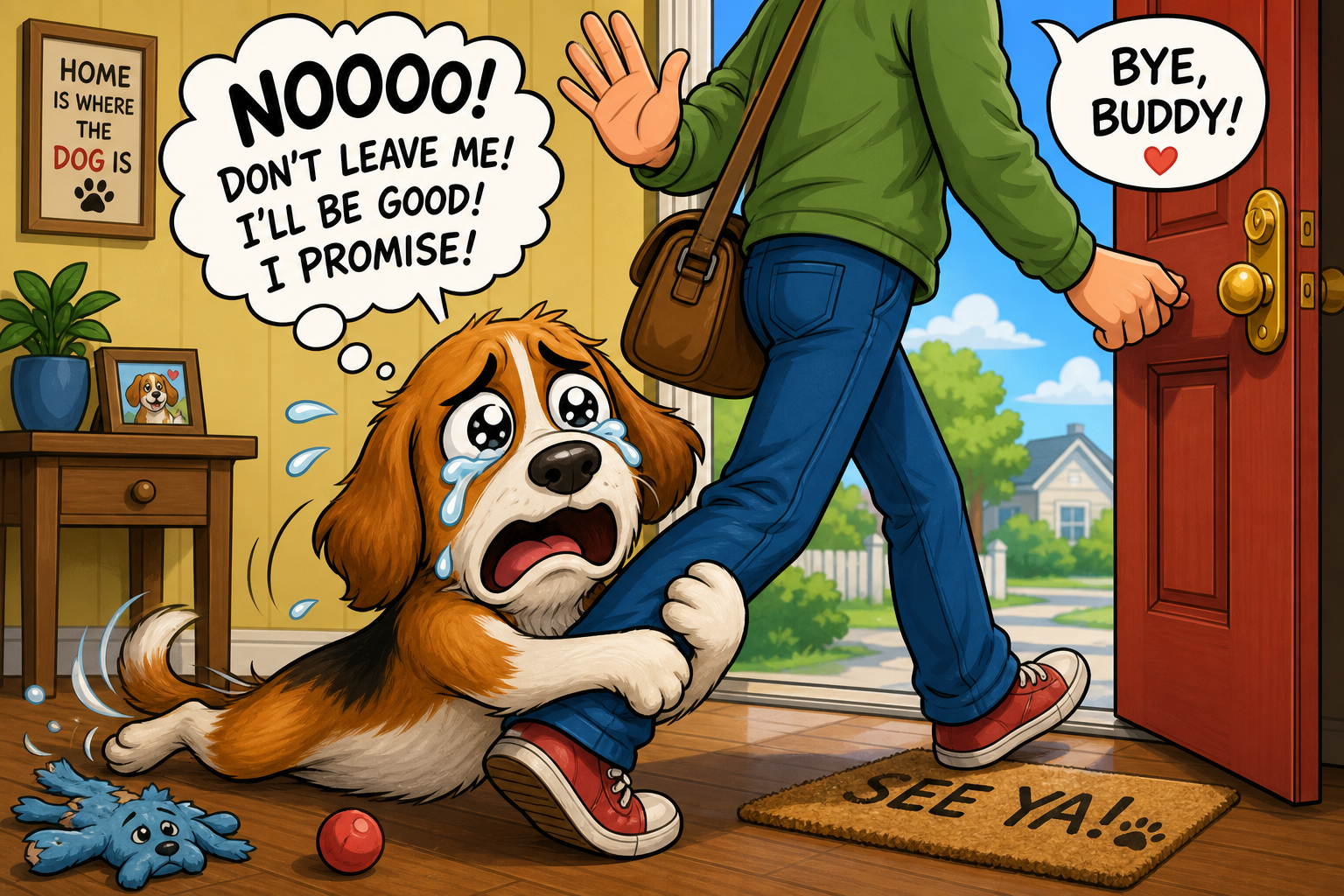
Τι είναι το άγχος αποχωρισμού.
Το άγχος αποχωρισμού εμφανίζεται όταν ο σκύλος βιώνει έντονο στρες κατά την απουσία του ιδιοκτήτη του. Εκδηλώνεται με συμπεριφορές όπως συνεχές γάβγισμα, καταστροφές στο σπίτι, ακαθαρσίες ή ακόμη και αυτοτραυματισμό. Η κατάσταση αυτή δεν είναι απλή «αταξία», αλλά ένα πραγματικό πρόβλημα που απαιτεί σωστή διαχείριση.
Συχνά σημάδια.
Υπερβολικό γάβγισμα ή ουρλιαχτό όταν μένει μόνος. Καταστροφή αντικειμένων (πόρτες, έπιπλα, παπούτσια). Ακαθαρσίες μέσα στο σπίτι. Έντονη ανησυχία πριν την αποχώρηση του ιδιοκτήτη. Υπερβολικός ενθουσιασμός κατά την επιστροφή.
Απλές συμβουλές για περιορισμό.
Σταδιακή εξοικείωση με την απουσία. Ξεκινήστε αφήνοντας τον σκύλο μόνο για πολύ μικρά χρονικά διαστήματα και αυξήστε τα σταδιακά. Αποφύγετε τις έντονες αποχαιρετιστήριες τελετουργίες. Οι υπερβολικές αγκαλιές και η συναισθηματική φόρτιση ενισχύουν το άγχος. Δημιουργήστε θετική συσχέτιση με την απουσία σας. Δώστε παιχνίδια εμπλουτισμού (π.χ. Kong με τροφή) μόνο όταν φεύγετε.
Καθημερινή άσκηση.
Ένας κουρασμένος σκύλος είναι πιο ήρεμος. Η επαρκής εκτόνωση μειώνει το στρες. Σταθερή ρουτίνα. Ταΐσμα, βόλτα και χρόνος παιχνιδιού σε σταθερές ώρες βοηθούν τον σκύλο να νιώθει ασφάλεια. Αποφύγετε την τιμωρία. Η τιμωρία επιδεινώνει το άγχος και δεν λύνει το πρόβλημα.
Πότε χρειάζεται βοήθεια ειδικού.
Εάν τα συμπτώματα είναι έντονα ή δεν βελτιώνονται, συνιστάται η συνεργασία με κτηνίατρο ή ειδικό συμπεριφοράς. Σε ορισμένες περιπτώσεις μπορεί να χρειαστεί και φαρμακευτική υποστήριξη. Η σωστή προσέγγιση, η υπομονή και η συνέπεια είναι τα βασικά στοιχεία για τη διαχείριση του άγχους αποχωρισμού. Με μικρά αλλά σταθερά βήματα, οι περισσότεροι σκύλοι μπορούν να μάθουν να μένουν μόνοι τους χωρίς στρες.