Παχυσαρκία σε σκύλους και γάτες: επιπτώσεις και πώς να αναγνωρίσετε το σωστό βάρος
Η παχυσαρκία σε σκύλους και γάτες αποτελεί συχνό αλλά υποτιμημένο πρόβλημα υγείας. Στο άρθρο αναλύονται οι επιπτώσεις της, αλλά κυρίως παρουσιάζονται απλοί και πρακτικοί τρόποι με τους οποίους κάθε ιδιοκτήτης μπορεί να αξιολογήσει το σωματικό βάρος του κατοικιδίου του στο σπίτι.
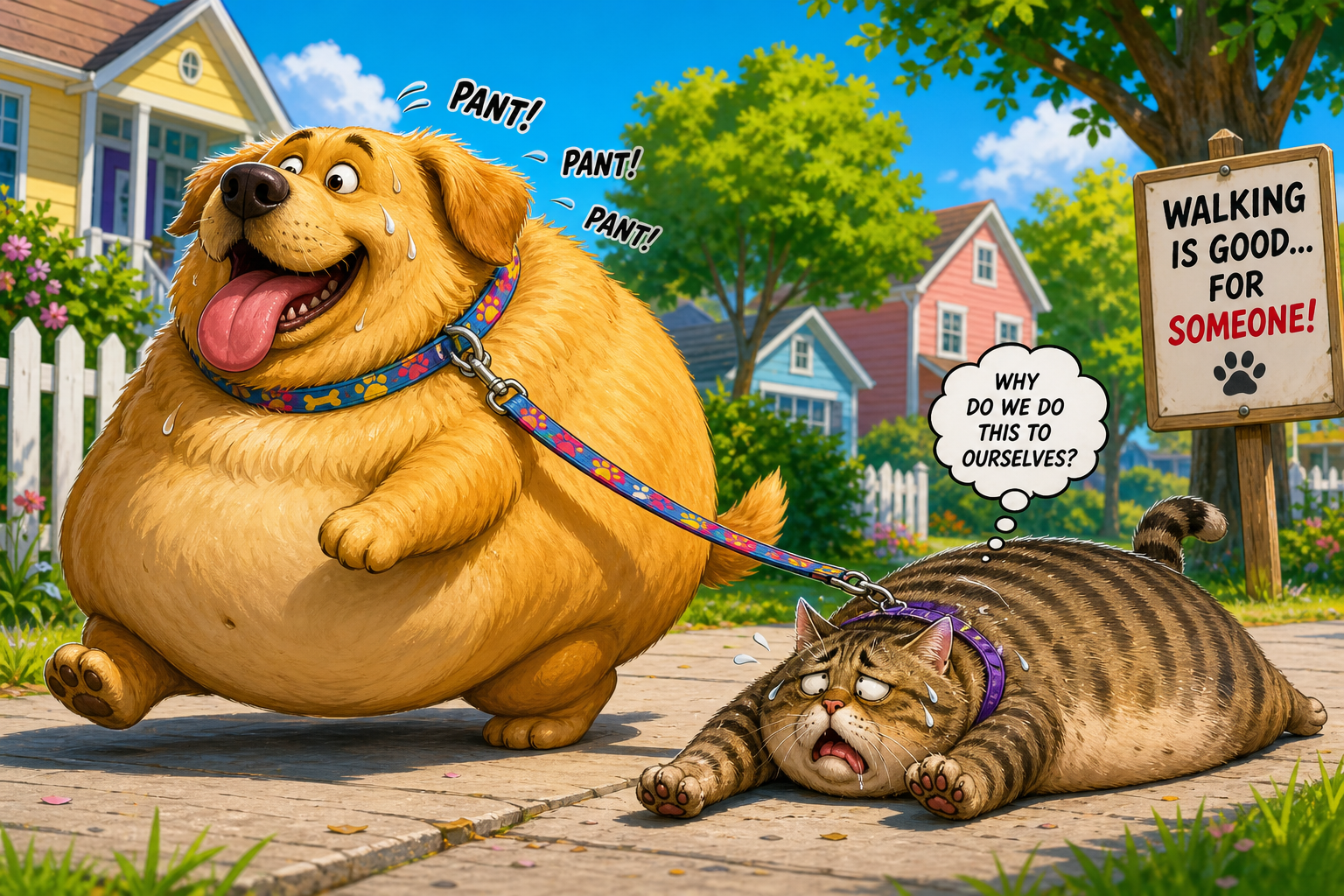
Παχυσαρκία σε σκύλους και γάτες.
Η παχυσαρκία είναι μια χρόνια κατάσταση κατά την οποία συσσωρεύεται υπερβολικό λίπος στο σώμα του ζώου. Δεν αφορά μόνο την εμφάνιση, αλλά επηρεάζει σχεδόν όλα τα συστήματα του οργανισμού. Συχνά προκύπτει από υπερβολική πρόσληψη τροφής σε συνδυασμό με μειωμένη άσκηση, ενώ παράγοντες όπως η στείρωση, η ηλικία και η φυλή παίζουν επίσης ρόλο.
Βραχυπρόθεσμες επιπτώσεις.
Στα αρχικά στάδια, τα ζώα μπορεί να εμφανίσουν:
Μειωμένη διάθεση για παιχνίδι και άσκηση. Γρήγορη κόπωση στο περπάτημα. Δυσκολία στην αναπνοή ή λαχάνιασμα. Δυσανεξία στη ζέστη. Επιβάρυνση αρθρώσεων (ιδιαίτερα σε μεγαλόσωμους σκύλους).
Μακροπρόθεσμες επιπτώσεις.
Με την πάροδο του χρόνου, η παχυσαρκία μπορεί να οδηγήσει σε:
Οστεοαρθρίτιδα και χρόνιο πόνο. Σακχαρώδη διαβήτη (ιδιαίτερα στις γάτες). Καρδιολογικά και αναπνευστικά προβλήματα. Ηπατική λιπίδωση (κυρίως στις γάτες). Μειωμένη διάρκεια ζωής. Αυξημένο κίνδυνο επιπλοκών σε αναισθησία και χειρουργεία.
Πώς να καταλάβει ο ιδιοκτήτης αν το ζώο έχει σωστό βάρος.
Αυτό είναι το πιο σημαντικό κομμάτι για την πρόληψη. Ο ιδιοκτήτης δεν χρειάζεται εξοπλισμό — μόνο παρατήρηση και αφή.
1. Έλεγχος με τα χέρια (ψηλάφηση πλευρών)
Τοποθετήστε τα χέρια σας στα πλευρά του ζώου:
Σε φυσιολογικό βάρος: τα πλευρά ψηλαφώνται εύκολα, σαν να αγγίζετε τα κόκαλα της παλάμης σας καλυμμένα με λεπτό στρώμα δέρματος. Σε υπέρβαρο ζώο: χρειάζεται πίεση για να τα νιώσετε. Σε παχύσαρκο ζώο: δεν μπορείτε να τα ψηλαφήσετε καθόλου.
Πρακτικό παράδειγμα:
Αγγίξτε την παλάμη σας. Με τεντωμένα δάχτυλα: έτσι πρέπει να είναι τα πλευρά (ιδανικό). Με σφιγμένη γροθιά: έτσι αισθάνονται σε παχυσαρκία.
2. Παρατήρηση από πάνω (μέση)
Κοιτάξτε το ζώο από πάνω: Φυσιολογικό: υπάρχει εμφανής «μέση» πίσω από τα πλευρά (το σώμα στενεύει ελαφρώς). Υπέρβαρο: η μέση είναι λιγότερο εμφανής. Παχύσαρκο: το σώμα φαίνεται οβάλ ή «βαρελοειδές», χωρίς καμία στένωση.
3. Παρατήρηση από το πλάι (κοιλιακή γραμμή)
Κοιτάξτε το ζώο στο πλάι: Φυσιολογικό: η κοιλιά ανεβαίνει ελαφρώς προς τα πίσω (σαν “γραμμή” προς τα πάνω). Υπέρβαρο: η κοιλιά είναι πιο επίπεδη. Παχύσαρκο: η κοιλιά «κρέμεται» προς τα κάτω.
4. Εναποθέσεις λίπους
Δώστε προσοχή σε σημεία όπου συσσωρεύεται λίπος: Βάση ουράς. Λαιμός και αυχένας. Κοιλιακή χώρα. Πλάτη. Σε παχύσαρκα ζώα, το λίπος είναι εμφανές και συχνά «μαλακό» στην αφή.
5. Κλίμακα BCS (Body Condition Score)
Η πιο αξιόπιστη μέθοδος είναι η κλίμακα 1–9: 1–3: πολύ αδύνατο. 4–5: ιδανικό βάρος. 6–7: υπέρβαρο. 8–9: παχύσαρκο. Στόχος είναι το ζώο να βρίσκεται στο 4 ή 5.
6. Μικρές καθημερινές ενδείξεις
Ο ιδιοκτήτης μπορεί να προσέξει: Αν το ζώο κουράζεται πιο εύκολα από πριν. Αν αποφεύγει το παιχνίδι. Αν δυσκολεύεται να ανέβει σκάλες ή καναπέ. Αν αναπνέει βαριά χωρίς έντονη δραστηριότητα. Αυτές οι αλλαγές συχνά εμφανίζονται πριν γίνει εμφανής η παχυσαρκία.
Πρόληψη και σωστή διαχείριση
Η διατήρηση φυσιολογικού βάρους επιτυγχάνεται με:
Μετρημένη ποσότητα τροφής (όχι «με το μάτι»). Περιορισμό λιχουδιών. Καθημερινή δραστηριότητα (βόλτες, παιχνίδι). Τακτικό ζύγισμα. Καθοδήγηση από κτηνίατρο. Η έγκαιρη αναγνώριση είναι το κλειδί — όσο νωρίτερα εντοπιστεί το πρόβλημα, τόσο πιο εύκολα διορθώνεται.