Καθαρισμός αυτιών γάτας χωρίς stress: Οδηγός για ασφαλή και ήρεμη φροντίδα
Ο καθαρισμός των αυτιών της γάτας μπορεί να γίνει μια εύκολη και ανώδυνη διαδικασία όταν εφαρμόζονται οι σωστές τεχνικές. Στο άρθρο αυτό παρουσιάζονται πρακτικά βήματα, συμβουλές συμπεριφοράς και κτηνιατρικές οδηγίες για να μειωθεί το stress της γάτας και να διασφαλιστεί η υγεία των αυτιών της.
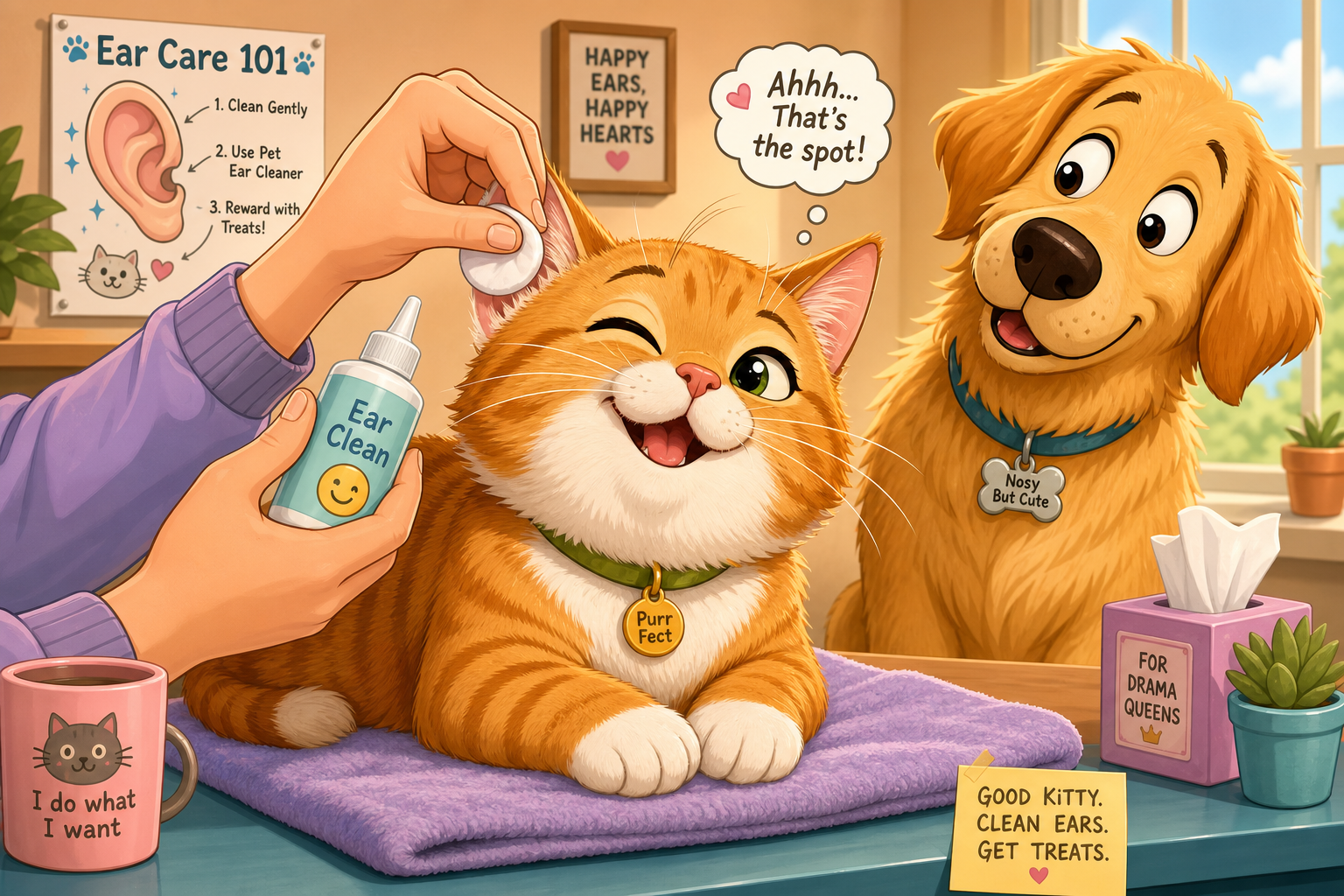
Γιατί είναι σημαντικός ο καθαρισμός αυτιών
Τα αυτιά της γάτας είναι ιδιαίτερα ευαίσθητα και μπορούν να συγκεντρώσουν κερί, βρωμιά ή ακόμα και παράσιτα όπως τα ακάρεα. Η συστηματική φροντίδα βοηθά: Στην πρόληψη ωτίτιδων. Στην έγκαιρη ανίχνευση προβλημάτων. Στη διατήρηση της άνεσης και της υγιεινής. Ωστόσο, πολλές γάτες αντιδρούν αρνητικά στη διαδικασία, γεγονός που καθιστά τον χειρισμό δύσκολο χωρίς σωστή προσέγγιση.
Πότε χρειάζεται καθαρισμός
Δεν χρειάζονται όλες οι γάτες συχνό καθαρισμό. Ενδείξεις ότι απαιτείται παρέμβαση:
Ορατή συσσώρευση καφέ ή μαύρου εκκρίματος. Δυσάρεστη οσμή. Συχνό τίναγμα κεφαλιού ή ξύσιμο. Ερυθρότητα ή ερεθισμός. Σε αυτές τις περιπτώσεις, είναι σημαντικό να αποκλειστεί πρώτα παθολογική αιτία από κτηνίατρο.
Προετοιμασία χωρίς stress
Η επιτυχία ξεκινά πριν καν αγγίξουμε τη γάτα:
Επιλέγουμε ήρεμο περιβάλλον χωρίς θορύβους. Χρησιμοποιούμε θετική ενίσχυση (λιχουδιές). Εξοικειώνουμε τη γάτα σταδιακά με το άγγιγμα των αυτιών. Αποφεύγουμε τον εξαναγκασμό. Η χρήση πετσέτας (τύπου “burrito”) μπορεί να βοηθήσει σε πιο ανήσυχες γάτες, αλλά πρέπει να γίνεται ήπια.
Βήμα-βήμα διαδικασία
Χρησιμοποιούμε ειδικό καθαριστικό αυτιών για γάτες (ποτέ νερό ή αλκοόλ). Ανασηκώνουμε απαλά το πτερύγιο του αυτιού. Εφαρμόζουμε μικρή ποσότητα διαλύματος στον έξω ακουστικό πόρο. Κάνουμε ελαφρύ μασάζ στη βάση του αυτιού για 20–30 δευτερόλεπτα. Αφήνουμε τη γάτα να τινάξει το κεφάλι της. Καθαρίζουμε το περίσσιο υγρό και τις ακαθαρσίες με γάζα (όχι μπατονέτες).
Συχνά λάθη που πρέπει να αποφεύγονται:
Χρήση μπατονέτας (κίνδυνος τραυματισμού και ώθησης υλικού βαθύτερα). Υπερβολικός καθαρισμός χωρίς λόγο. Χρήση ακατάλληλων προϊόντων. Πίεση ή βίαιος χειρισμός. Αυτά μπορεί να προκαλέσουν περισσότερο stress αλλά και τραυματισμούς.
Πότε να απευθυνθείτε σε κτηνίατρο
Ο καθαρισμός στο σπίτι δεν αντικαθιστά τη διάγνωση. Ζητήστε κτηνιατρική βοήθεια όταν:
Υπάρχει έντονη οσμή ή πύον. Η γάτα πονάει κατά την αφή. Παρατηρείται απώλεια ισορροπίας. Τα συμπτώματα επιμένουν. Σε περιπτώσεις ωτίτιδας ή ακάρεων απαιτείται ειδική θεραπεία.
Συμβουλή κτηνιάτρου
Η εξοικείωση από μικρή ηλικία είναι το «κλειδί». Οι γάτες που μαθαίνουν από νωρίς ότι ο χειρισμός των αυτιών δεν είναι απειλή, συνεργάζονται πολύ πιο εύκολα στην ενήλικη ζωή.