Καλοκαιρινή προστασία από καύσωνα για τα κατοικίδια: Οδηγός επιβίωσης για σκύλους και γάτες
Οι υψηλές θερμοκρασίες του καλοκαιριού αποτελούν σοβαρό κίνδυνο για την υγεία των κατοικιδίων. Η έγκαιρη πρόληψη και η σωστή φροντίδα μπορούν να αποτρέψουν επικίνδυνες καταστάσεις όπως η θερμοπληξία. Στο άρθρο αυτό θα βρείτε πρακτικές οδηγίες για ασφαλές καλοκαίρι με τον σκύλο ή τη γάτα σας.
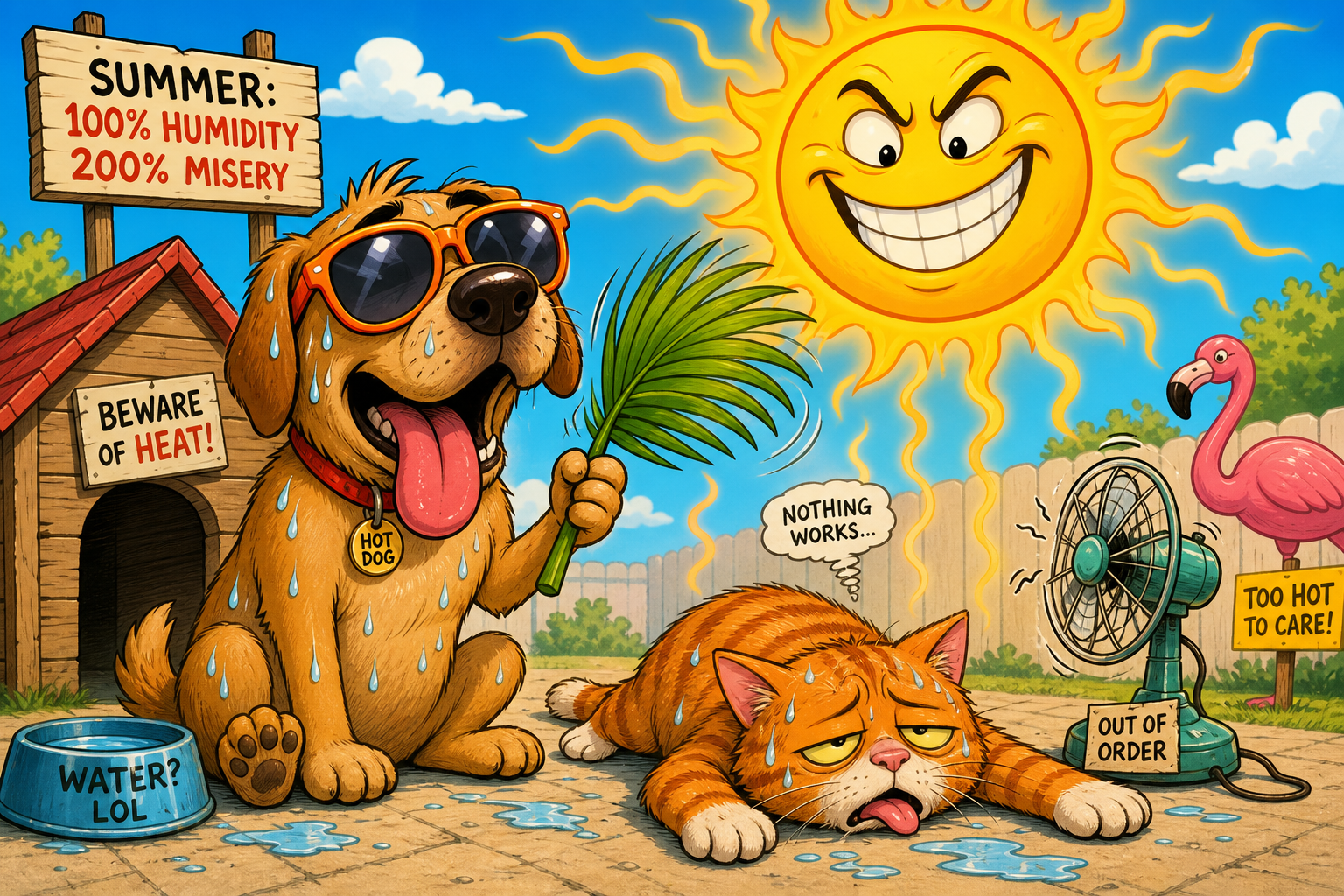
Γιατί ο καύσωνας είναι επικίνδυνος για τα κατοικίδια
Σε αντίθεση με τον άνθρωπο, οι σκύλοι και οι γάτες δεν ιδρώνουν αποτελεσματικά για να ρυθμίσουν τη θερμοκρασία τους. Η αποβολή θερμότητας γίνεται κυρίως μέσω του λαχανιάσματος, γεγονός που τους καθιστά ιδιαίτερα ευάλωτους σε υψηλές θερμοκρασίες και υγρασία.
Οι πιο ευπαθείς ομάδες είναι: Βραχυκεφαλικές φυλές (π.χ. bulldog, pug) Ηλικιωμένα ζώα Παχύσαρκα κατοικίδια Ζώα με καρδιοαναπνευστικά προβλήματα
Συμπτώματα θερμοπληξίας
Η θερμοπληξία αποτελεί επείγον περιστατικό και μπορεί να αποβεί μοιραία αν δεν αντιμετωπιστεί άμεσα.
Κύρια σημάδια:
Έντονο και παρατεταμένο λαχάνιασμα. Σιελόρροια. Αδυναμία ή αστάθεια. Εμετός ή διάρροια. Υπερθερμία (πάνω από 40°C). Κατάρρευση ή σπασμοί.
Πρακτικά μέτρα πρόληψης
Η πρόληψη είναι το πιο αποτελεσματικό μέτρο προστασίας.
Αποφύγετε τις βόλτες τις ώρες αιχμής (12:00–17:00). Παρέχετε συνεχώς δροσερό και καθαρό νερό. Εξασφαλίστε σκιά σε εξωτερικούς χώρους. Μην αφήνετε ποτέ το ζώο μέσα σε αυτοκίνητο, ακόμη και για λίγα λεπτά. Προσαρμόστε τη διάρκεια και ένταση της άσκησης. Χρησιμοποιήστε δροσερά χαλάκια ή ανεμιστήρες όπου χρειάζεται.
Πώς να δροσίζετε σωστά το κατοικίδιο
Η σταδιακή ψύξη είναι κρίσιμη. Η απότομη αλλαγή θερμοκρασίας μπορεί να προκαλέσει επιπλοκές. Βρέξτε απαλά το σώμα με χλιαρό (όχι παγωμένο) νερό. Εστιάστε σε περιοχές όπως κοιλιά, μασχάλες και πέλματα. Χρησιμοποιήστε υγρές πετσέτες. Αποφύγετε τον πάγο απευθείας στο σώμα.
Πότε πρέπει να επισκεφθείτε κτηνίατρο
Επικοινωνήστε άμεσα με κτηνίατρο όταν:
Υποψιάζεστε θερμοπληξία. Τα συμπτώματα επιμένουν. Το ζώο παρουσιάζει νευρολογικά σημεία. Δεν ανταποκρίνεται στα μέτρα δροσιάς. Η έγκαιρη παρέμβαση μπορεί να σώσει τη ζωή του ζώου.
Επιπλέον συμβουλές για το καλοκαίρι
Μην κουρεύετε υπερβολικά το τρίχωμα (παρέχει φυσική μόνωση). Προσαρμόστε τη διατροφή αν μειώνεται η όρεξη. Ελέγχετε τακτικά για αφυδάτωση. Προτιμήστε δροσερούς χώρους διαμονής μέσα στο σπίτι.