Ιδανική διατροφή για γάτες: Ξηρή ή υγρή τροφή;
Η επιλογή μεταξύ ξηρής και υγρής τροφής αποτελεί ένα από τα πιο συχνά ερωτήματα των ιδιοκτητών γάτας. Και οι δύο τύποι έχουν πλεονεκτήματα και μειονεκτήματα, ενώ η ιδανική διατροφή εξαρτάται από την ηλικία, την υγεία και τον τρόπο ζωής της γάτας. Στο άρθρο αυτό εξετάζουμε τα βασικά χαρακτηριστικά κάθε επιλογής και δίνουμε πρακτικές κατευθυντήριες οδηγίες.
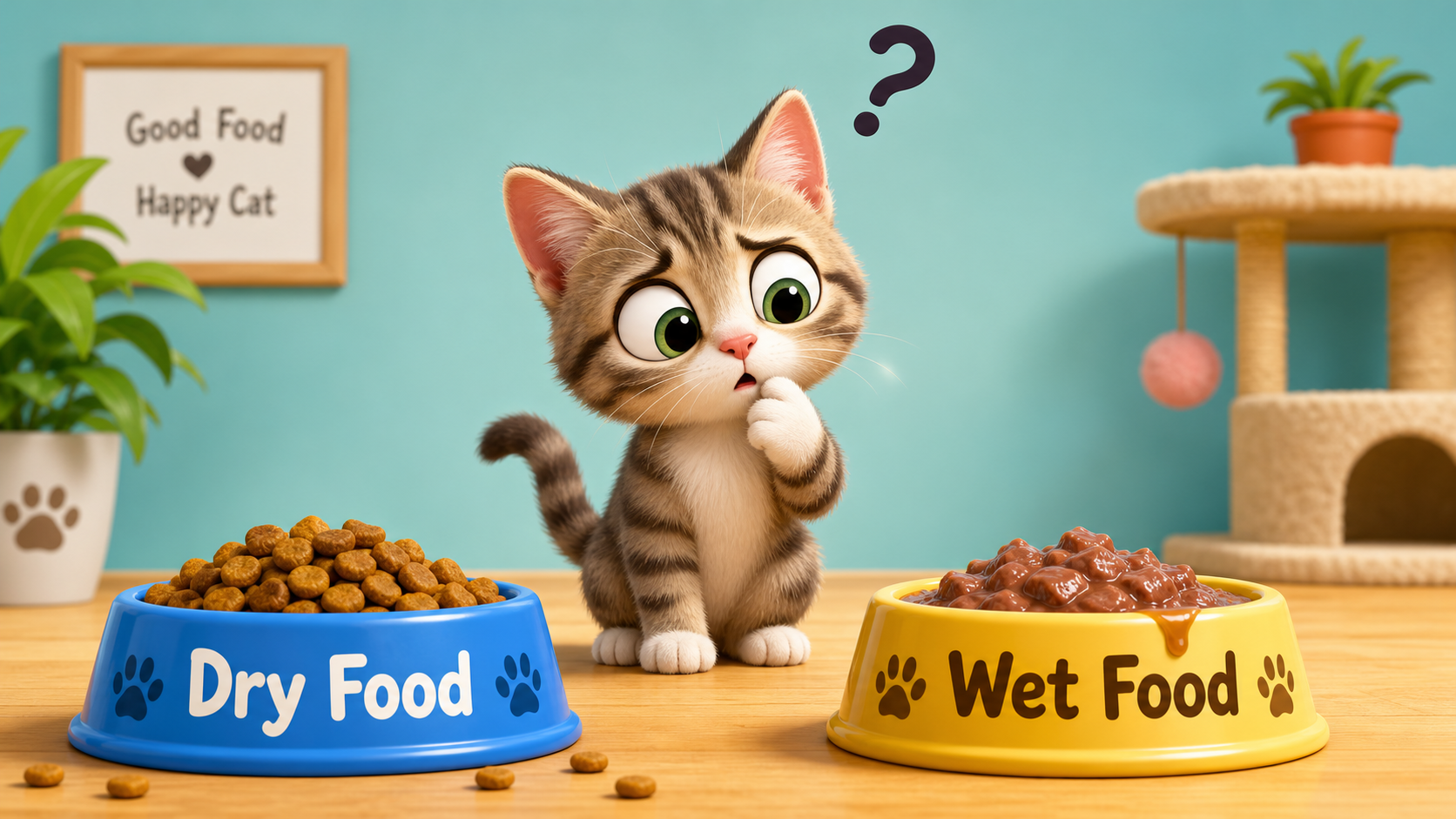
Η διατροφή της γάτας είναι καθοριστικής σημασίας για την υγεία και τη μακροζωία της. Ως αυστηρά σαρκοφάγο είδος, η γάτα έχει συγκεκριμένες διατροφικές ανάγκες, όπως υψηλή πρόσληψη πρωτεΐνης ζωικής προέλευσης και επαρκή ενυδάτωση. Το βασικό δίλημμα που αντιμετωπίζουν οι περισσότεροι ιδιοκτήτες είναι αν πρέπει να επιλέξουν ξηρή ή υγρή τροφή.
Ξηρή τροφή: Πλεονεκτήματα και μειονεκτήματα.
Η ξηρή τροφή (κροκέτες) είναι ιδιαίτερα δημοφιλής λόγω της ευκολίας χρήσης και αποθήκευσης.
Πλεονεκτήματα:
Μεγάλη διάρκεια ζωής και εύκολη αποθήκευση Οικονομικότερη επιλογή Συμβάλλει στη μηχανική απομάκρυνση της οδοντικής πλάκας
Μειονεκτήματα:
Χαμηλή περιεκτικότητα σε υγρασία (περίπου 8–10%) Αυξημένος κίνδυνος αφυδάτωσης, ειδικά σε γάτες που δεν πίνουν αρκετό νερό Πιθανή συσχέτιση με ουρολογικά προβλήματα
Υγρή τροφή: Πλεονεκτήματα και μειονεκτήματα.
Η υγρή τροφή περιέχει υψηλό ποσοστό υγρασίας και προσεγγίζει περισσότερο τη φυσική διατροφή της γάτας.
Πλεονεκτήματα:
Υψηλή περιεκτικότητα σε νερό (70–80%), που βοηθά στην ενυδάτωση Καλύτερη αποδοχή από τις περισσότερες γάτες Ιδανική για γάτες με νεφρικά ή ουρολογικά προβλήματα
Μειονεκτήματα:
Υψηλότερο κόστος Μικρότερη διάρκεια ζωής μετά το άνοιγμα Δεν συμβάλλει ιδιαίτερα στη στοματική υγιεινή
Ποια είναι η ιδανική επιλογή;
Δεν υπάρχει μία ενιαία απάντηση για όλες τις γάτες. Η ιδανική διατροφή εξαρτάται από: Ηλικία (γατάκια, ενήλικες, ηλικιωμένες γάτες) Ιατρικό ιστορικό (νεφρική νόσος, παχυσαρκία, ουρολιθίαση) Επίπεδο δραστηριότητας Προτιμήσεις της γάτας
Στην πράξη, πολλοί κτηνίατροι προτείνουν έναν συνδυασμό ξηρής και υγρής τροφής, ώστε να αξιοποιούνται τα πλεονεκτήματα και των δύο. Για παράδειγμα, η υγρή τροφή μπορεί να καλύπτει τις ανάγκες ενυδάτωσης, ενώ η ξηρή να χρησιμοποιείται συμπληρωματικά.
Συμπεράσματα.
Η επιλογή μεταξύ ξηρής και υγρής τροφής δεν είναι απόλυτη. Το σημαντικότερο είναι η ποιότητα της τροφής και η προσαρμογή της στις ανάγκες της κάθε γάτας. Η συμβουλή του κτηνιάτρου παραμένει καθοριστική, ιδιαίτερα σε περιπτώσεις χρόνιων παθήσεων.