Πώς να Κάνεις το Σπίτι Ασφαλές για το Κατοικίδιό σου
Αυτό το άρθρο είναι ένας απλός οδηγός για όλους τους κηδεμόνες κατοικίδιων. Σου εξηγεί εύκολα ποια πράγματα στο σπίτι είναι επικίνδυνα για σκύλους και γάτες, πώς να τα προστατέψεις σε κάθε δωμάτιο και τι να κάνεις αν το ζώο σου καταπιεί κάτι άσχημο. Η ασφάλεια ξεκινάει με λίγη προσοχή και σωστή οργάνωση.
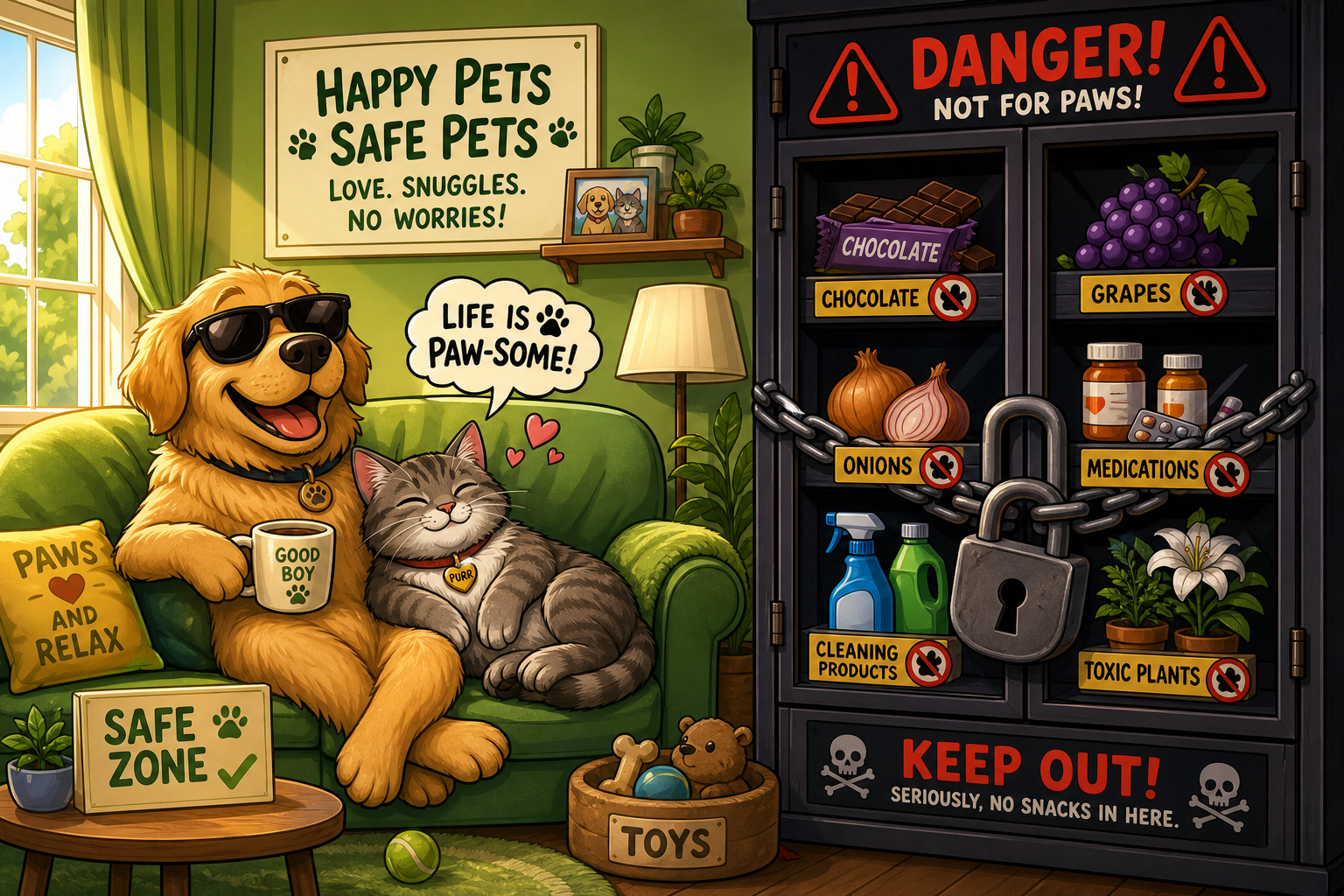
Τα κατοικίδια μας είναι μέλη της οικογένειας και όλοι θέλουμε να είναι ασφαλή. Το πρόβλημα είναι ότι πολλά καθημερινά αντικείμενα στο σπίτι μας μπορεί να είναι τοξικά ή επικίνδυνα για σκύλους και γάτες. Μην ανησυχείς, με λίγες απλές αλλαγές μπορείς να κάνεις το σπίτι σου ασφαλέστατο χώρο για το κατοικίδιό σου.
Τι Να Κρύψεις Από το Κατοικίδιό σου.
1. Φαγητά που Επικίνδυνα
Πολλά φαγητά που τρώμε εμείς είναι τοξικά για τα ζώα:
*Σοκολάτα και γλυκά: Μπορεί να προκαλέσουν τρόμο και καρδιακά προβλήματα. *Σταφύλια και σταφίδες: Μπορούν να καταστρέψουν τα νεφρά. *Κρεμμύδι και σκόρδο: Προκαλούν αναιμία. *Τσιχλάκια χωρίς ζάχαρη: Περιέχουν ξυλιτόλη που βλάπτει συκώτι. *Καφές και τσάι: Η καφεΐνη είναι πολύ επικίνδυνη. *Αλκοόλ: Απαγορεύεται τελείως για κατοικίδια.
2. Φάρμακα και Χημικά
Τα φάρμακα που παίρνουμε εμείς είναι εξαιρετικά επικίνδυνα:
*Μην αφήνεις ποτέ φάρμακα σε πάγκους ή τσάντες. *Τα καθαριστικά σπιτιού (λευκός οξικός, αμμωνία) πρέπει να βρίσκονται σε κλειστά ντουλάπια ψηλά. *Τα έλαια (ευκάλυπτος, τσάι, κανέλα) είναι τοξικά κυρίως για γάτες.
3. Φυτά
Μερικά φυτά που έχουμε στο σπίτι ή στον κήπο είναι επικίνδυνα:
*Λύκια: Θανατηφόρα για γάτες, ακόμα και λίγη γύρη. *Τουλίπες, νάρκισσοι: Οι βολβοί είναι τοξικοί. *Φιλντερόν, χρυσάνθεμο: Τοξικά για σκύλους και γάτες.
Οδηγός Κατά Δωμάτιο
1. Κουζίνα
*Κλείσε πάντα τα ντουλάπια, ειδικά αν έχεις έξυπνο σκύλο ή γάτα που σκαρφαλώνει. *Άφησε οτιδήποτε τοξικό μακριά από τους πάγκους. *Μην μοιράζεσαι το φαγητό σου με το κατοικίδιο. *Κάλυψε τους κάδους απορριμμάτων.
2. Πλυντήριο Ρούχων
*Πάντα να ελέγχεις αν υπάρχει ζώο μέσα πριν ξεκινήσεις το πλυντήριο! *Κλείσε την πόρτα όταν δεν το χρησιμοποιείς. *Οι χαρτοπετσέτες στεγνώματος περιέχουν χημικά που ερεθίζουν το ζώο.
3. Τουαλέτα
*Κατέβασε πάντα το καπάκι – το νερό με καθαριστικά είναι επικίνδυνο.
4. Καθιστικό και Υπνοδωμάτιο
*Κρύψε τα ηλεκτρικά καλώδια ή βάλε τα σε προστατευτικά σωλήνες – ο κίνδυνος ηλεκτροπληξίας είναι πραγματικός. *Μην αφήνεις μικρά αντικείμενα (μολύβια, λαστιχάκια, παιχνίδια παιδιών, μπαταρίες, στο πάτωμα. *Οι μπαταρίες είναι εξαιρετικά επικίνδυνες αν καταποθούν.
5. Κήπος
*Κάλυψε τα χώματα στις γλάστρες με πέτρες ή δίκτυ. *Αν έχεις τοξικά φυτά, φτιάξε φράχτη γύρω τους. *Πρόσεχε τα λιπάσματα – πολλά περιέχουν χημικά που προκαλούν σοβαρά προβλήματα.
Πού Να Βάζεις τα Επικίνδυνα Πράγματα
*Πάνω σε ψηλά ντουλάπια που το ζώο δεν μπορεί να φτάσει. *Σε κλειστές κούτες με κλείστρα. *Μακριά από το πάτωμα και τα σημεία που πατάει το ζώο. *Καλύτερα σε προϊόντα με ένδειξη «ασφαλές για κατοικίδια».
Τι Να Κάνεις αν το Ζώο σου Καταπιεί Κάτι Άσχημο
Άμεσα, αν δεις οποιοδήποτε από αυτά τα συμπτώματα:
1. Εμετό ή διάρροια. 2. Υπερβολική σιελόρροια (πολλή σάλια). 3. Αδυναμία ή ότι δεν μπορεί να σηκωθεί. 4. Δυσκολία στην αναπνοή. 5. Τρόμο ή επιληπτικές κρίσεις. 6. Αλλαγή στη συμπεριφορά.
Το πρώτο βήμα είναι να καλέσεις αμέσως τον κτηνίατρο. Έχε πάντα το τηλέφωνό του έτοιμο. Μην περιμένεις να δεις αν θα περάσει η κατάσταση.
Πώς να Αποφεύγεις Προβλήματα.
Τα ζώα συχνά γλείφουν ή καταπίνουν επικίνδυνα πράγματα επειδή:
Πλήττουν. Έχουν άγχος. Είναι περίεργα.
Για να το αποφύγεις αυτό:
Δώσε του πολλά παιχνίδια για να ασχοληθεί. Βγάζει τον σκύλο για βόλτα κάθε μέρα. Παίζεις μαζί του καθημερινά. Δημιούργησε ένα ασφαλές, ενδιαφέρον περιβάλλον.
Το Τελικό Μήνυμα.
Η ασφάλεια του κατοικίδιού σου δεν χρειάζεται να είναι δύσκολη. Αρκεί λίγο προσοχή στα πράγματα που δεν βλέπεις αμέσως. Με απλές αλλαγές – να κλειδώνεις τα ντουλάπια, να κρύβεις τα καλώδια, να προστατεύεις το φαγητό – το σπίτι σου γίνεται ένα ασφαλές σπίτι για τον τετράποδο φίλο σου.
Η πρόληψη είναι το καλύτερο φάρμακο. Μάθε, προετοίμασε και φρόντισε για να μεγαλώνουν τα κατοικίδιά σου υγιή και χαρούμενα.
Συμβουλή: Κράτα τον οδηγό αυτόν κοντά σου και ελέγξε το σπίτι σου δωμάτιο προς δωμάτιο. Θα εκπλαγείς πόσα επικίνδυνα πράγματα μπορείς να βρεις και να διορθώσεις εύκολα!